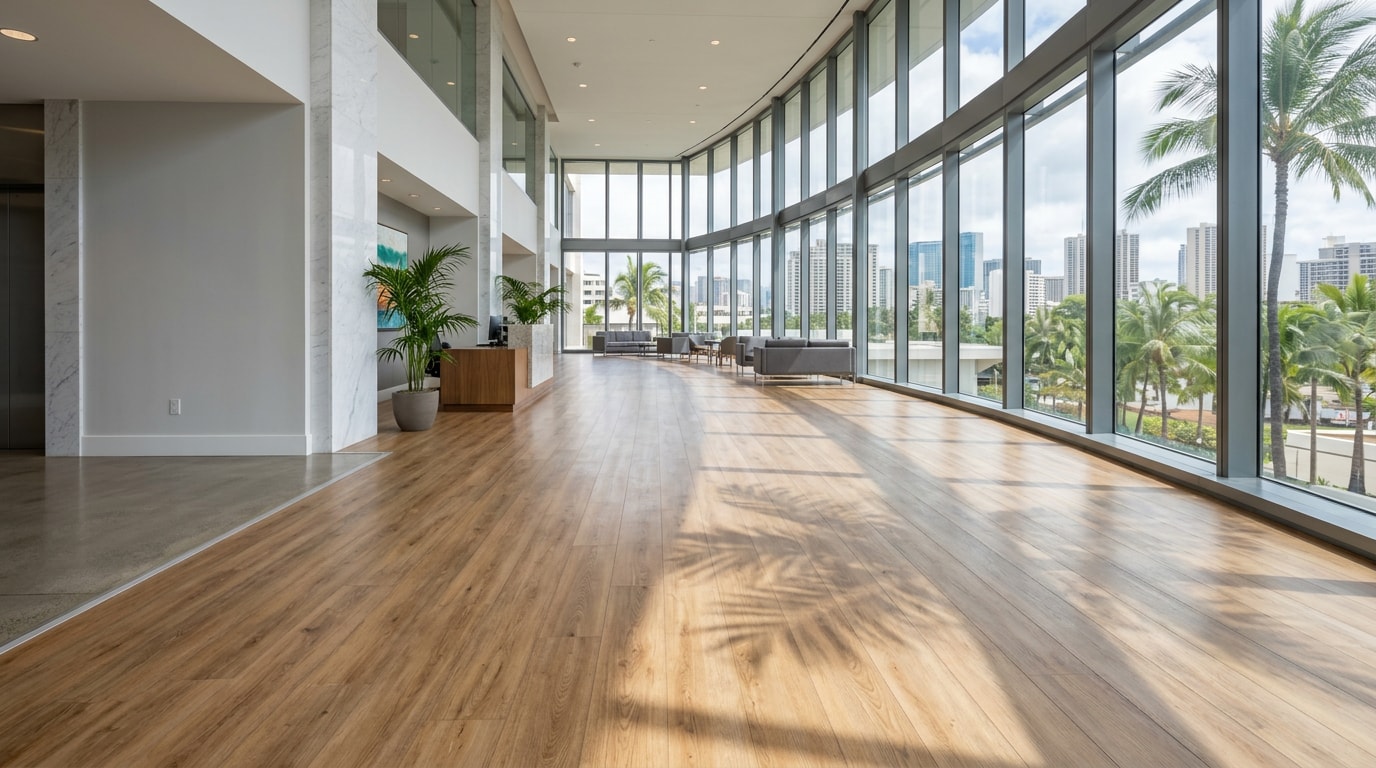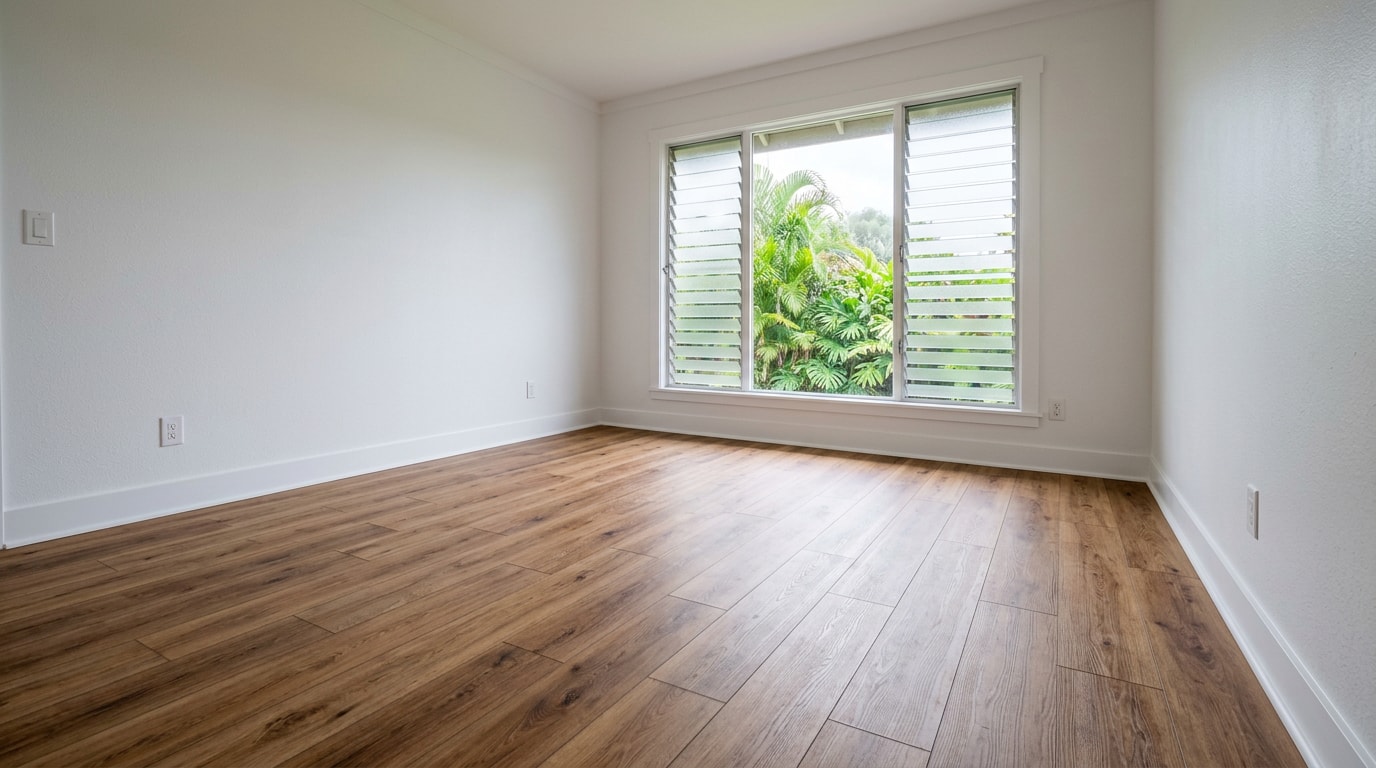
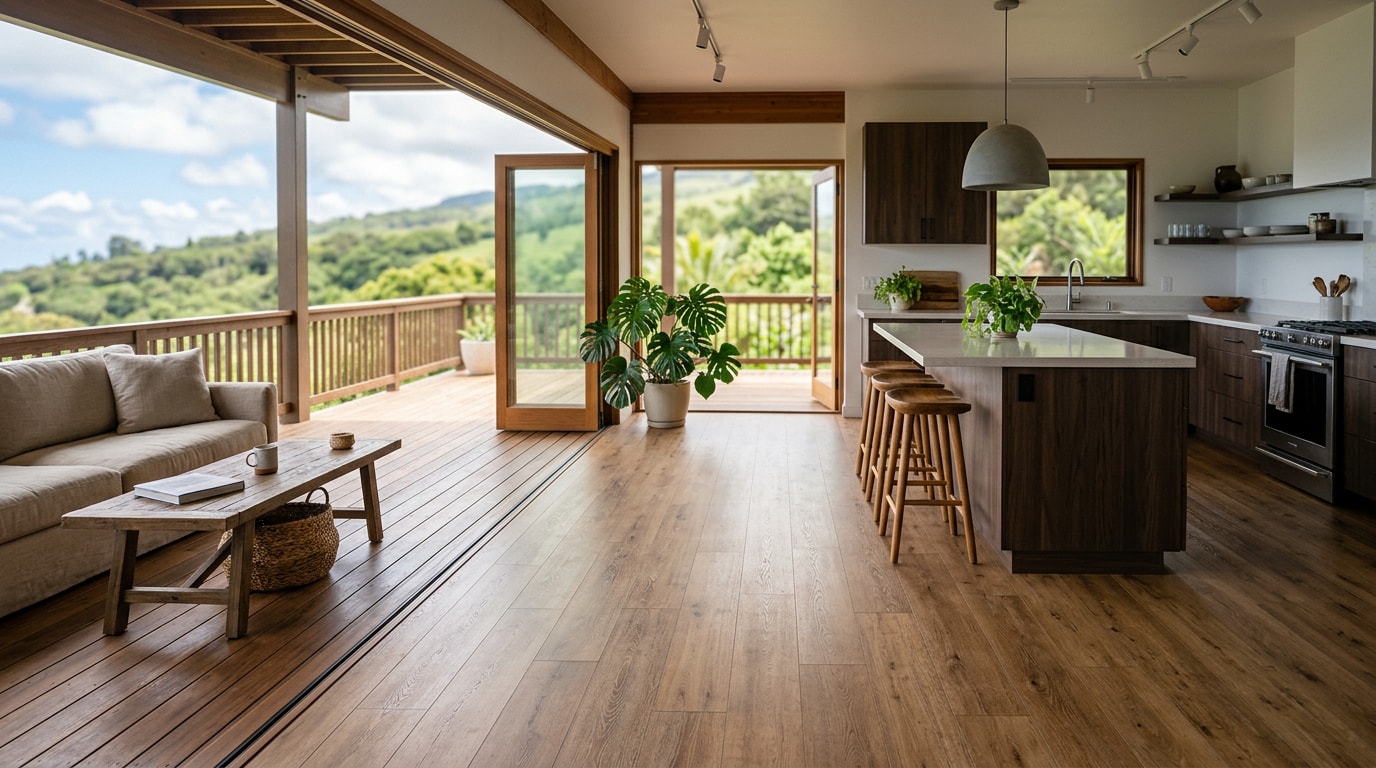
SPC flooring is a rigid vinyl plank built around a core of limestone powder and PVC, and in Kula, HI it has quietly become the default hard floor for upcountry homes. This guide covers how it is made, what it actually costs delivered to Maui in 2026, how it compares to WPC and laminate, and the freight line item mainland price guides never mention.
What Is SPC Flooring?
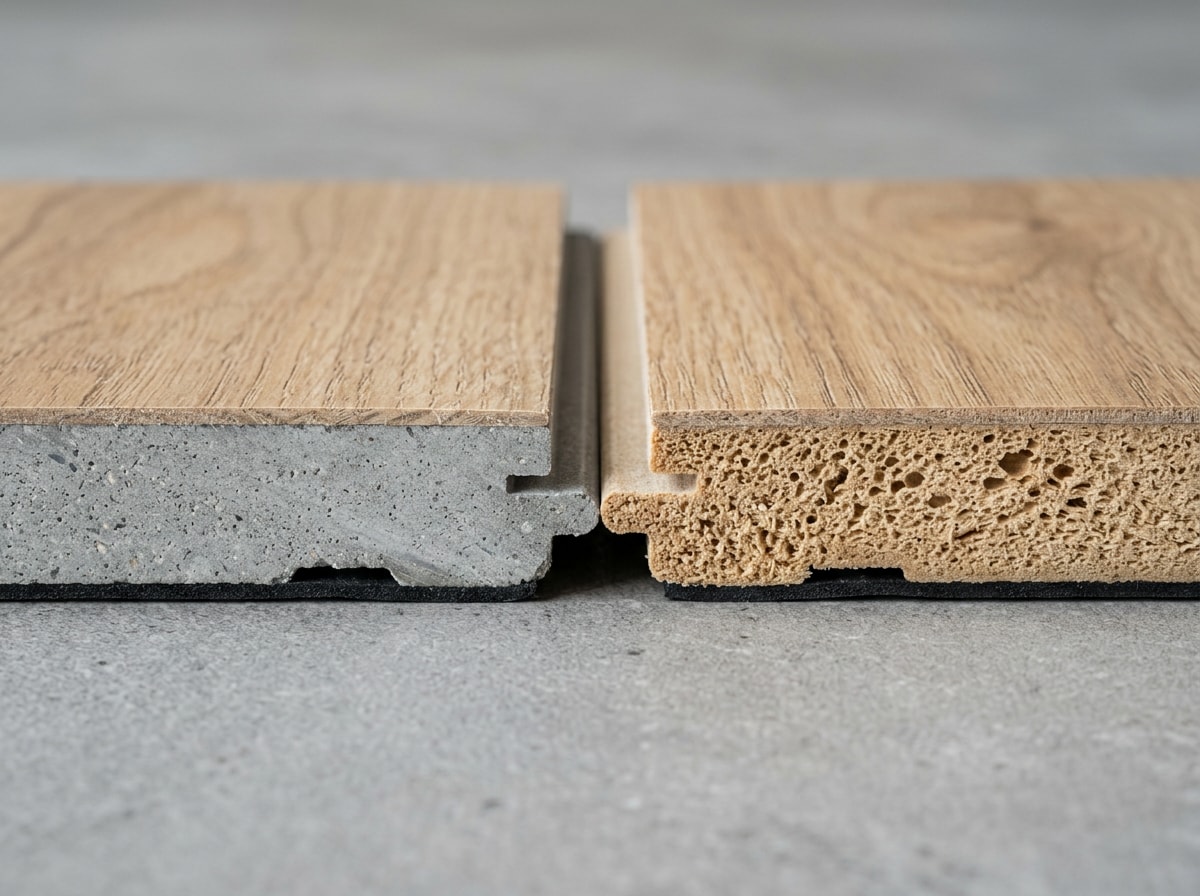
SPC stands for stone plastic composite (you will also see stone polymer composite). It is a rigid core plank made from limestone powder, PVC and stabilizers, topped with a printed design layer and a clear wear layer.
It is not a separate flooring family. SPC is a subcategory of luxury vinyl plank, defined by its dense, non-flexing core.
That density is the whole point. Old sheet vinyl flexed and telegraphed every ridge in the subfloor beneath it. A stone-filled core stays rigid, resists denting and bridges minor subfloor imperfections instead of sinking into them.
The looks have caught up too. High-definition printing and embossed texture give current SPC lines convincing oak, koa-style, travertine and herringbone visuals, usually with beveled edges that read as individual boards from standing height.
SPC Flooring Layers, Top to Bottom
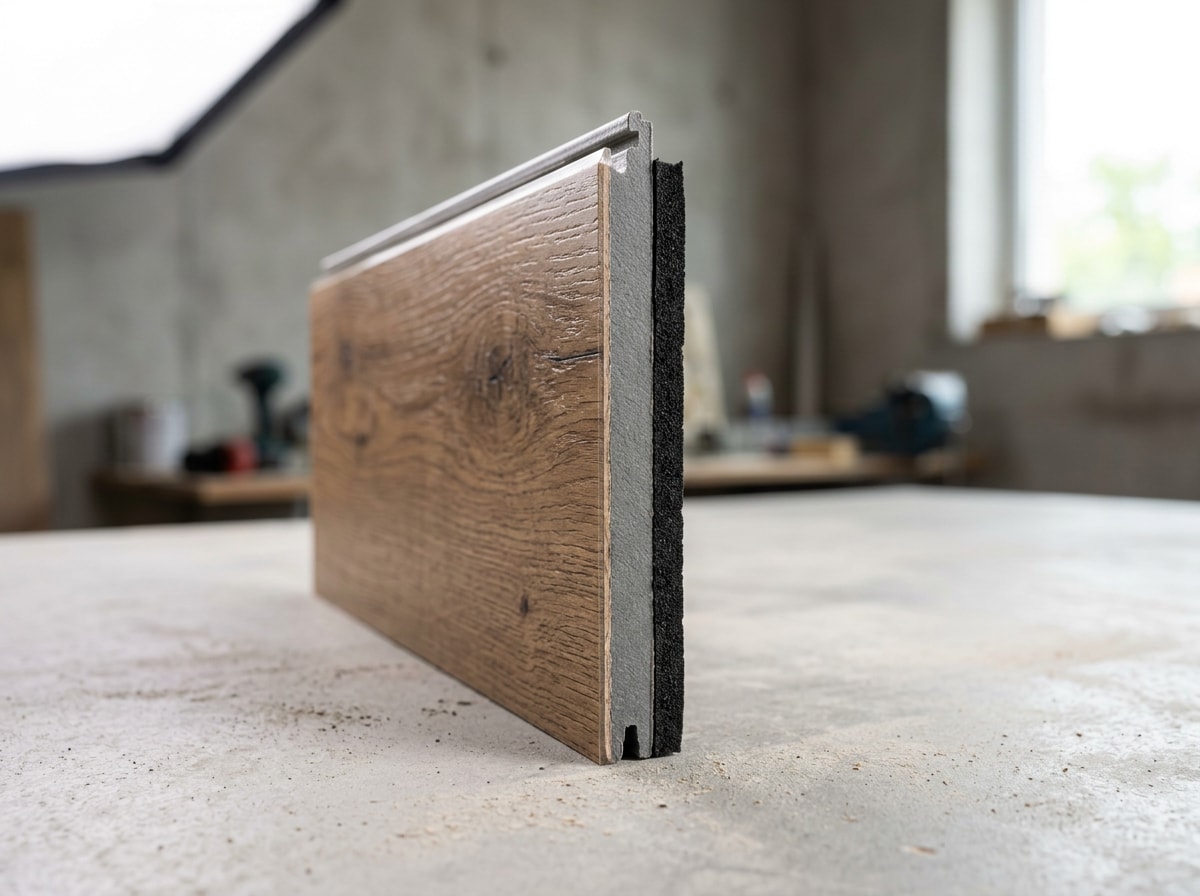
Read a plank from the top down and you know most of what matters:
- UV coating. A thin cured topcoat that fights scuffing and fading.
- Wear layer. Clear vinyl measured in mils. This is the part that takes the abuse.
- Printed design layer. The photographic wood or stone image.
- Rigid SPC core. The limestone and PVC body, typically 3.2 to 5 mm thick.
- Attached backing. Foam, cork or IXPE underlayment bonded to the plank.
The mil rating of the wear layer is the single most useful number to carry into a showroom.
- 6 to 12 mil: bedrooms and light-traffic rooms.
- 20 mil or better: kitchens, entries, hallways, pets, rentals.
Ask the supplier for tested numbers, not marketing adjectives. Rigid core plank is covered by a published industry specification, ASTM F3261 for resilient flooring with a rigid polymeric core, and serious manufacturers will tell you what their product was tested against.
Because the stone core is dense, SPC delivers that performance at a thinner profile than WPC. Helpful when you are trying to keep existing door heights.
Advantages of SPC Flooring
It Is Waterproof at the Core
The stone and plastic core absorbs no water. It will not swell or delaminate if a spill sits overnight, which is the real difference from laminate, where only the surface resists moisture.
One honest caveat: a waterproof plank does not create a waterproof floor assembly. Standing water can still reach the subfloor through expansion gaps, transitions and door thresholds. Wipe up spills anyway.
Maintenance Is Close to Nothing
Sweep or vacuum on a hard-floor setting, then damp mop with a pH-neutral cleaner made for resilient floors. No waxing, no polishing, no refinishing cycle.
Skip these:
- Abrasive pads and scouring powders.
- Oil soaps and wax-based products, which leave a dirt-attracting film.
- Steam mops. Heat can soften adhesives, and many manufacturers void the warranty over them.
It Holds Its Shape Through Temperature Swings
Every floor expands and contracts as temperature and humidity move. A stone-filled core moves far less than a foamed wood-flour or wood-fiber core, so seams stay tight and planks are less prone to gapping or peaking.
This matters more in Kula than most national guides admit. Upcountry Maui sits thousands of feet above the coast, and homes here see warm, sun-loaded afternoons followed by cool, damp nights as the cloud belt moves in. You can compare conditions at your elevation against coastal stations through the NWS Honolulu climate portal.
In a house with lanai doors open all day and no air conditioning, that daily cycle is exactly what stresses a floor.
Stable is not immune. Follow the acclimation time on the carton and leave the specified expansion gap at every wall and vertical surface.
Installation Is Fast
Most SPC is a floating click-lock plank. No glue, no nails, and it goes over most sound hard surfaces including tile, vinyl and plywood.
Subfloor prep is minimal but not optional: flat, clean, dry and solid, to the manufacturer's flatness tolerance. Sloped or drained slabs rule out a floating floor. Stairs, complex layouts and long open spans that need planned transitions are where our flooring installation and repair team earns its keep.
Disadvantages of SPC Flooring
The same density that makes SPC tough makes it hard and cool underfoot. In a kitchen prep zone or a standing-desk office, that is real fatigue. An anti-fatigue mat or area rug solves it, but know it before you buy.
It cannot be sanded or refinished. A gouged plank gets replaced, which is easy on a floating floor but only if you kept leftover stock from the same dye lot. Order 10 percent overage and store a box.
It is scratch resistant, not scratch proof. A dropped cast-iron pan can still chip the surface.
Aesthetically, even good printing repeats. You will not get the grain variation, patina or repairability of solid wood, and premium SPC costs more per square foot than most laminate.
On indoor air quality, ask for third-party certification rather than a vague "low VOC" claim on the box. FloorScore certification from the Resilient Floor Covering Institute tests finished flooring against the California Section 01350 emissions criteria, and most reputable SPC lines carry it.
SPC vs. WPC vs. Laminate
| Factor | SPC (stone core) | WPC (wood plastic core) | Laminate (HDF core) |
|---|---|---|---|
| Core material | Limestone and PVC | Foamed wood flour and PVC | Compressed wood fiber |
| Water behavior | Core absorbs none | Core absorbs none | Swells permanently if soaked |
| Dent resistance | Best | Moderate | Good on surface |
| Comfort and sound | Hard, cool, louder | Softest and warmest | Middle |
| Thickness at equal performance | Thinnest | Thickest | Middle |
| Typical lifespan | 20 to 30 years | 15 to 25 years | 15 to 25 years |
Use a rule of thumb instead of crowning a winner. Choose SPC where moisture, grit and temperature swing dominate. Choose WPC where underfoot comfort and quiet matter more than raw toughness.
Here is the nuance most comparisons skip: newer laminate lines have genuinely improved surface water ratings, and some carry limited waterproof warranties. So the honest split is surface spills, where good laminate now holds its own, versus chronic moisture and wet rooms, where SPC is still the safer call. If laminate is on your shortlist, our guide to laminate flooring for Kihei homeowners breaks down that side in detail.
SPC Flooring Cost in Kula, HI
Treat everything below as a 2026 planning range, not a quote. Product grade, room size, layout complexity and site conditions all move the number.
| Option | Material only (per sq ft) | Installed (per sq ft) |
|---|---|---|
| Entry SPC | $1.75 to $2.75 | $4.00 to $6.00 |
| Mid-grade SPC (20 mil) | $2.75 to $4.50 | $5.50 to $8.00 |
| Premium SPC | $4.50 to $7.00 | $7.00 to $10.50 |
| Solid hardwood | $6.00 to $14.00 | $10.00 to $20.00 |
| Porcelain or stone tile | $3.00 to $12.00 | $10.00 to $25.00 |
Installed pricing generally covers labor, underlayment where needed, transitions, and removal and disposal of the old floor.
The line item mainland guides never mention is Neighbor Island freight. Flooring shipped to Maui carries a surcharge that varies by carrier, weight and whether the product ships palletized, and it can move a material quote noticeably once you multiply it across a whole house. Always ask for delivered pricing, not mainland shelf pricing.
Two more cost drivers specific to upcountry homes:
- Subfloor prep on older post-and-pier houses. Many Kula homes have raised wood floors that have settled. Leveling compound or sheathing repair is a separate line.
- Access. Narrow, steep driveways can mean a smaller truck and a second delivery trip.
For a figure tied to your actual rooms, get a free estimate and we will price the material, the prep and the freight together.
What We Do Differently on Kula Installations
Two adjustments come straight from jobsite experience upcountry.
First, we extend acclimation. Cartons sit in the actual room, stacked flat and opened at the ends, for longer than the coastal minimum, because a plank trucked up from a hot Kahului warehouse arrives at a very different temperature than the room it will live in.
Second, we check subfloor moisture on raised wood floors before a single plank goes down, not after. Cool nights and ground moisture under a post-and-pier house show up as elevated readings far more often than they do in a slab-on-grade home in Kihei.
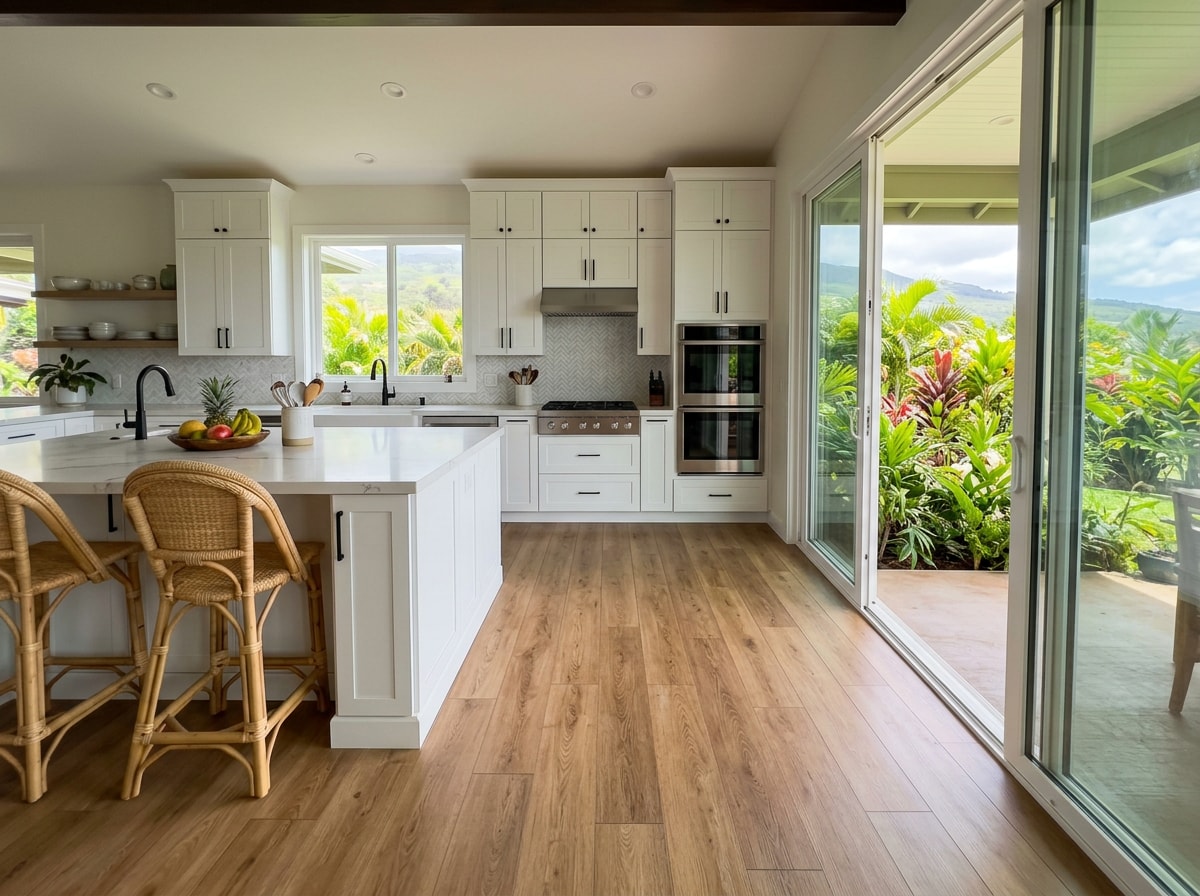
We also mock up a few rows in daylight with the lanai doors open. Plank color reads differently under upcountry cloud cover than under showroom lighting. You can see finished work across the island in our project gallery.
Best Rooms for SPC Flooring
Strong fits:
- Kitchens, bathrooms, laundry rooms and mudrooms.
- Entries and hallways, especially just inside a lanai door.
- Open-plan living and dining areas, where one continuous floor beats three transitions.
- Rentals and ʻohana units, where a damaged plank gets swapped instead of a room getting refinished.
Think twice in:
- Bedrooms and playrooms, where warmth and softness outrank water resistance.
- Enclosed lanai or sunroom spaces that bake in prolonged direct sun behind glass.
For Kula homes specifically, the mix of open-air living, red dirt tracked in on shoes and paws, and the day-to-night temperature swing makes SPC a sensible default through the working areas of the house. We install it throughout Kula and across Maui.
FAQ
How long does SPC flooring last?
Most residential SPC lasts 20 to 30 years. Product grade, wear layer thickness, installation quality and traffic level move that number. Residential warranties commonly run 15 years to lifetime, while commercial coverage on the same product is usually shorter.
Is SPC flooring better than laminate?
In moisture-prone rooms, yes. The stone core does not swell, while laminate's HDF core does and the damage is permanent. On a tight budget in dry bedrooms, quality laminate delivers a similar look for less.
Is SPC the same as LVP or vinyl plank?
SPC is a type of luxury vinyl plank, specifically the rigid stone-core type. Flexible glue-down LVT and older sheet vinyl are different products with different cores and different installation methods.
Can SPC flooring be used in bathrooms?
Yes, and bathrooms are one of its best applications. Leave the specified expansion gap, then seal the perimeter at the tub, shower base and toilet flange with a flexible sealant instead of caulking planks tight. Check the manufacturer's wet-area language, since some warranties limit full-bath coverage.
How thick should SPC flooring be?
Overall thickness of 4 to 6 mm suits most homes, but the wear layer matters more than total thickness. Go 20 mil or higher in kitchens, entries, hallways and any home with pets.
Can SPC be installed over existing tile?
Usually yes, if the tile is sound, bonded and flat. Wide or deep grout lines may need filling first so the joints do not telegraph. Loose or hollow tile has to come out.
Does SPC flooring need underlayment?
Most SPC ships with attached IXPE, cork or foam backing and needs nothing extra. Adding a second pad can exceed the compression limit and stress the locking system. On a concrete slab you may still need a separate vapor retarder.
Does SPC scratch or dent easily?
It resists denting better than any other rigid core product thanks to the stone content, and it resists scratching better than most laminate. It is not immune. Use felt pads under furniture and wide, soft casters on rolling chairs.
Is SPC flooring good for pets?
It is one of the best options. The core is waterproof for accidents, a 20 mil wear layer handles claws, and damaged planks can be replaced individually.
What are the disadvantages of SPC flooring?
Three stand out. It is hard and cool underfoot during long periods of standing, it cannot be sanded or refinished, and the printed surface will never match real wood's grain variation.
Planning Your Floor
SPC earns its place in Kula for unglamorous reasons: a waterproof core, a stable plank that tolerates a big day-to-night swing, and a replaceable board when something goes wrong.
The specs worth arguing over are wear layer mils, tested performance, subfloor prep and delivered price. Everything else is styling.
See our full range of services at Luxe Pacific or contact us to walk your rooms and put real numbers on the project.