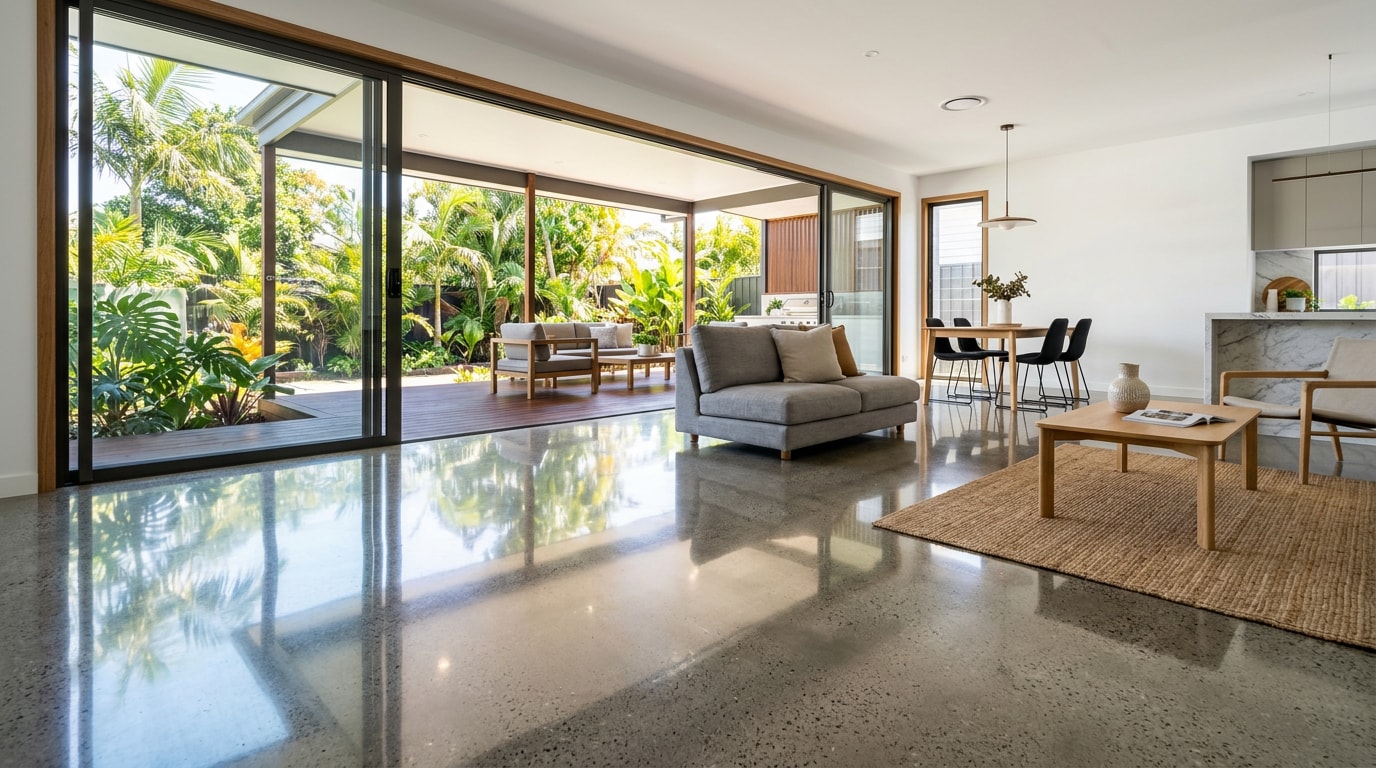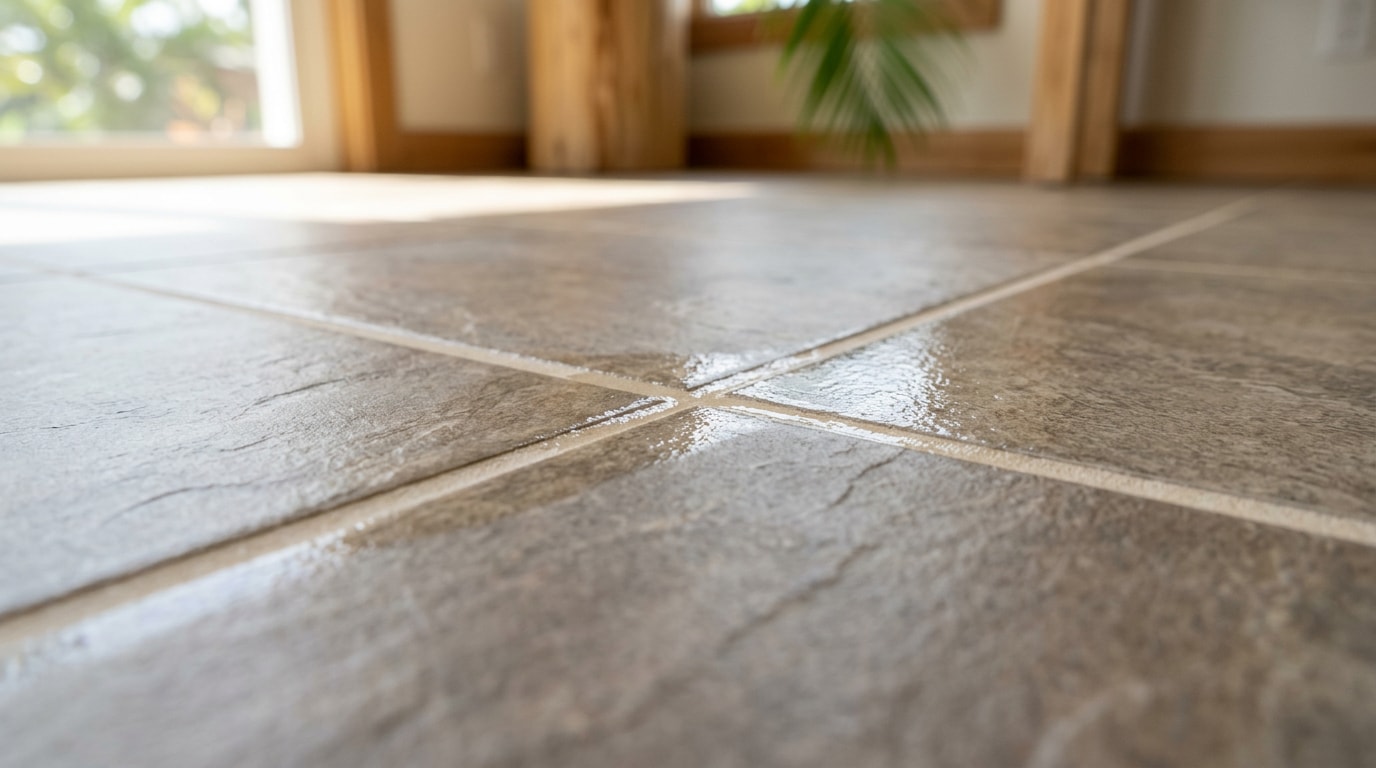
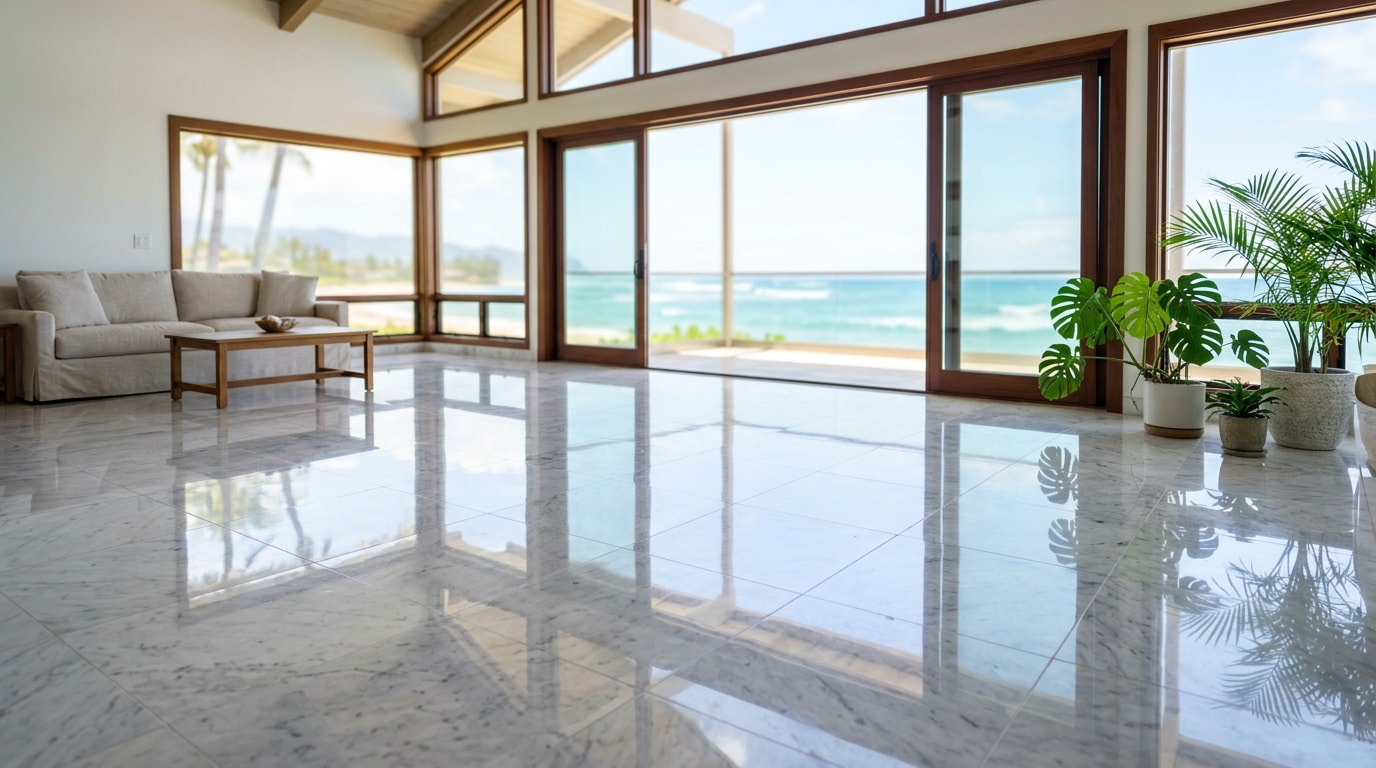
Stone and tile restoration in Lahaina, HI brings cloudy marble, gritty travertine, and dull shower tile back to life after years of salt air, sun, and foot traffic. Cleaning alone can't fix etching, scratching, or cracked grout lines once the damage reaches below the surface. Here's what the process involves, what it costs, and when it's time to call a professional.
Why Lahaina Stone and Tile Needs Restoration, Not Just Cleaning
West Maui's combination of salt spray, UV exposure, and heavy trade winds wears down stone and tile faster than almost anywhere else on the island. Pool decks, lanais, and oceanfront entries take the worst of it.
Signs your surfaces need restoration rather than another round of mopping:
- Marble or travertine that looks cloudy or hazy even right after cleaning
- A gritty or sandy texture underfoot on polished floors
- Dull spots where drinks, sunscreen, or cleaning acids have etched the stone
- Grout that's stained orange, brown, or black despite scrubbing
- Tiles that sound hollow when tapped, a sign they've detached from the substrate
If several of these apply, the surface needs mechanical correction. Request a free estimate before minor etching turns into a full tile replacement.
How the Restoration Process Works
Restoration is a mechanical process, not a chemical one. A technician grinds, hones, and polishes the material instead of relying on surface cleaners.
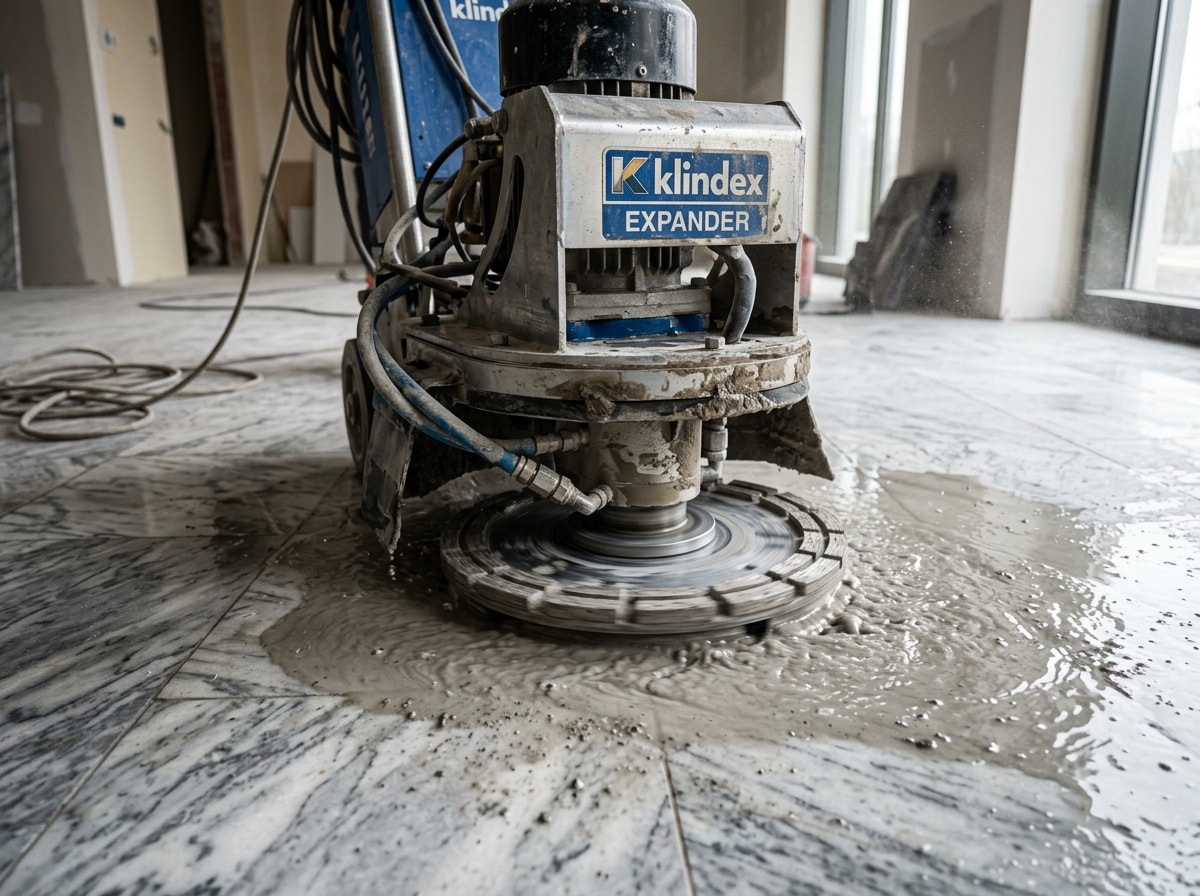
- Diamond grinding flattens the surface, removing deep scratches, lippage, and uneven wear.
- Honing uses progressively finer grits to smooth the stone and remove haze.
- Polishing brings out the final shine and clarity.
Properly restored stone reflects light on its own. It doesn't need wax or a topical coating to look glossy, unlike surfaces treated with a temporary cleaning gloss that wears off within weeks.
Stone type changes which methods are safe. Calcareous stone is composed mainly of calcium carbonate, and calcium carbonate is sensitive to acidic solutions, so mild, non-acidic cleaners are recommended. That distinction, drawn from the Natural Stone Institute's care guidelines, determines which abrasives and chemistries are safe for marble and travertine versus granite. Our stone surface restoration service matches the method to the material before any grinding starts.
Marble Polishing in Lahaina Homes
Marble floor restoration follows a flatten-and-polish sequence that removes etching, scratches, and uneven wear. A flatter grind produces a clearer reflection because light bounces off an even plane instead of scattering across micro-scratches.
Marble is calcareous, so acidic cleaners dull and etch it over time. Homeowners who've tried vinegar-based or citrus cleaners on marble floors usually notice dull spots afterward. That's etching, and regular mopping can't undo it. Diamond polishing compounds restore shine without introducing new etch marks.
Travertine Honing for Lanais, Pools, and Patios
Travertine is technically a form of limestone. It responds to honing methods similar to other calcareous stone, though its natural pits and voids need extra care during the process.
Travertine pitting worsens from foot traffic and acidic exposure, including the mild acidity in rainwater, pool chemicals, and sunscreen residue common around Lahaina lanais and decks. Honing restores a consistent texture; deep pits may need separate filling as part of a full restoration. Homeowners comparing durable outdoor flooring options sometimes ask about terrazzo as an alternative; our guide to terrazzo flooring in Hawaii covers how it holds up against the same coastal conditions.
Stone Walls, Showers, and Countertops
Vertical surfaces and countertops demand more precision than floor work. Gravity, seams, and tighter work areas change how grinding and polishing tools are handled.
For kitchens in coastal Lahaina homes, etch-free marble countertops matter since citrus, vinegar, and everyday cooking acids cause visible dulling over time. Shower stone restoration follows similar principles, with added focus on grout lines and waterproofing details. Tile and stone wall assemblies in wet areas are expected to follow recognized industry construction and material standards, which is why the TCNA Handbook exists to clarify and standardize installation specifications for tile, based on properly designed and constructed substructures (see the Tile Council of North America's published standards). That matters whenever restoration work touches a waterproofed shower system. For grout lines around showers and counters, our grout cleaning and sealing service addresses the detail work floor restoration skips.
Tile and Grout Repairs: Cracks, Hollow Tiles, and Spalling
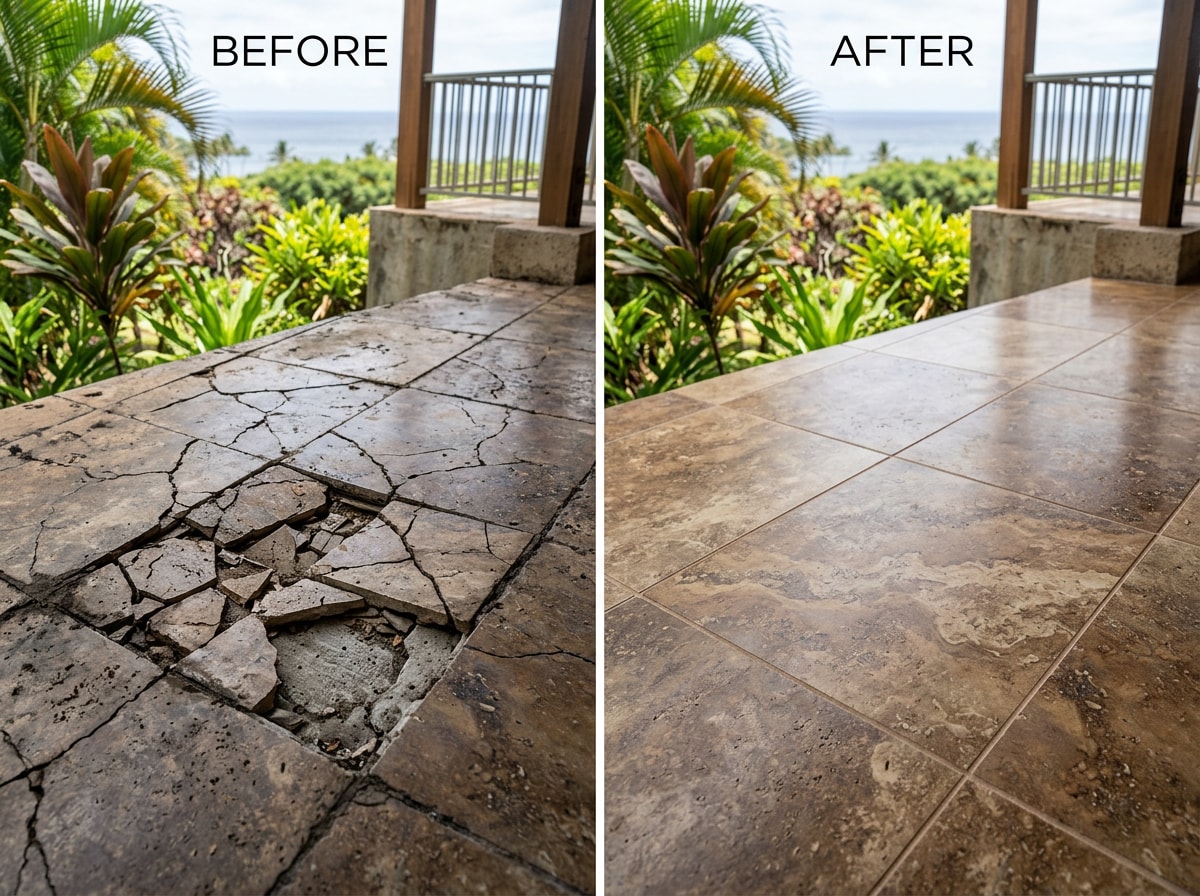
Beyond polishing, many Lahaina properties need structural repairs: cracked seams, hollow tiles, spalling, and chipped edges from salt air, humidity swings, and heavy foot traffic. Salt air accelerates corrosion in grout and setting materials, while moisture cycling causes tiles to detach from the substrate, creating the hollow sound you hear when tapping a loose tile.
Different problems call for different fixes:
| Repair Method | Best For | Typical Time | Relative Cost |
|---|---|---|---|
| Epoxy fill | Hairline cracks, small chips | Same day | Low |
| Color-matched patch | Spalling, surface pitting | 1-2 days | Moderate |
| Full tile replacement | Hollow tile, severe cracking | 1-3 days | Higher |
Hollow tile repair usually requires removing and resetting the tile entirely, since fill alone won't reattach it to the substrate. Deteriorated grout is often what let moisture reach the substrate in the first place, which is why grout repair frequently accompanies these fixes. A lanai that sees daily foot traffic and ocean breeze tends to show seam cracking and lippage years before an equivalent indoor floor would. Our tile repair and replacement service handles everything from a single cracked tile to a full hollow-tile section.
Cleaning and Sealing to Protect the Work
Restoration and maintenance work as a cycle: clean, hone, polish, repair, then seal to protect the result. Tile and grout cleaning removes buildup that accelerates wear, while sealing adds a protective layer that slows future staining and etching.
Not every cleaner suits every surface. Calcareous stone like marble and travertine needs a pH-neutral cleaner, while siliceous stone such as granite tolerates a wider range of products. Using the wrong chemistry undoes polishing work fast. The Safer Choice label helps consumers and commercial buyers identify products with safer chemical ingredients, without sacrificing quality or performance , which is a useful reference point from the EPA when choosing maintenance chemicals for stone and tile. For ongoing upkeep, see our tile cleaning and restoration and stone sealing and protection services.
What Restoration Costs and How Long It Takes
Pricing depends on stone type, damage severity, and finish level, which is why most restoration companies, including ours, quote per job rather than a flat per-square-foot rate. Jobs over roughly 300 square feet typically need more than a single day to complete properly.
Walk through recent examples of similar jobs in our completed restoration projects before requesting a quote.
Restoring Stone and Tile During Lahaina's Rebuild
West Maui's recovery adds a layer most restoration guides don't mention. About one-fourth of homes and about 6 percent of nonresidential properties in Lahaina had been rebuilt as of July 15, 2026 , and construction continues to move through formerly closed sections of town. For surviving homes near active rebuild zones, ongoing debris removal, heavy equipment traffic, and fine construction dust settle into grout and stone pores the same way salt air does, often faster. Front Street reopened to vehicle traffic on August 1, 2026, after Maui County completed infrastructure work including seawall and sidewalk repairs, new railings, and road paving , which is reintroducing regular salt spray and traffic to stone surfaces along the coast that sat untouched for years. If your property is near an active construction corridor, more frequent sealing checks make sense until the surrounding work settles down. See our Lahaina service area page for coverage details, or browse our Maui-wide service areas if you split time between properties.
About Our Lahaina Restoration Crew
Luxe Pacific has handled marble, travertine, and tile restoration across West Maui's coastal homes, from oceanfront lanais in Kaanapali to condo showers in central Lahaina. We've seen firsthand how fast salt air etches an unsealed marble threshold and how a hollow tile near a lanai door usually means the substrate underneath needs attention, not just the tile. Questions about a specific surface? Contact us for a free, no-pressure assessment.
FAQ
Do you clean stone, ceramic, and natural tile?
Yes. Natural stone cleaning, ceramic tile cleaning, and natural tile care all fall within a standard restoration scope. Whether the surface is marble, travertine, porcelain, or ceramic, the process adjusts to match the material.
What do you use to clean grout?
Mild detergent handles everyday grime, but set-in staining often needs a stronger, higher-pH cleaner or an acid-safe formula depending on the grout and surrounding stone. Choosing the right product prevents damage to nearby calcareous stone during grout cleaning.
Can you get rid of the orange color in grout?
Orange grout stains usually come from hard water minerals, salt residue, and airborne dust settling into porous grout, a pattern common in coastal environments like Lahaina. Mechanical scrubbing paired with the correct cleaning chemistry resolves most of this discoloration without needing full grout replacement.
How long does a restoration job take?
Timeline depends on the stone type, the finish you want, and total job size. As a rough guide, jobs over roughly 300 square feet typically need more than a single day to complete properly.
How is the job priced?
Restoration work is typically charged per job rather than strictly per square foot, since the quote factors in stone type, damage severity, and finish level. Contact us for a quote specific to your property.
Does salt air or construction dust from the rebuild affect my stone differently?
Salt air etches and corrodes grout and setting materials over time, while construction dust from nearby rebuild activity settles into pores and grout lines faster than normal airborne dirt. Both call for more frequent sealing checks than an inland home would need.
Is restoration worth it compared to full replacement?
In most cases, yes. Restoration costs less than ripping out and replacing marble, travertine, or tile, and it preserves materials that are often no longer available to match. Full replacement only makes sense when the substrate itself has failed.