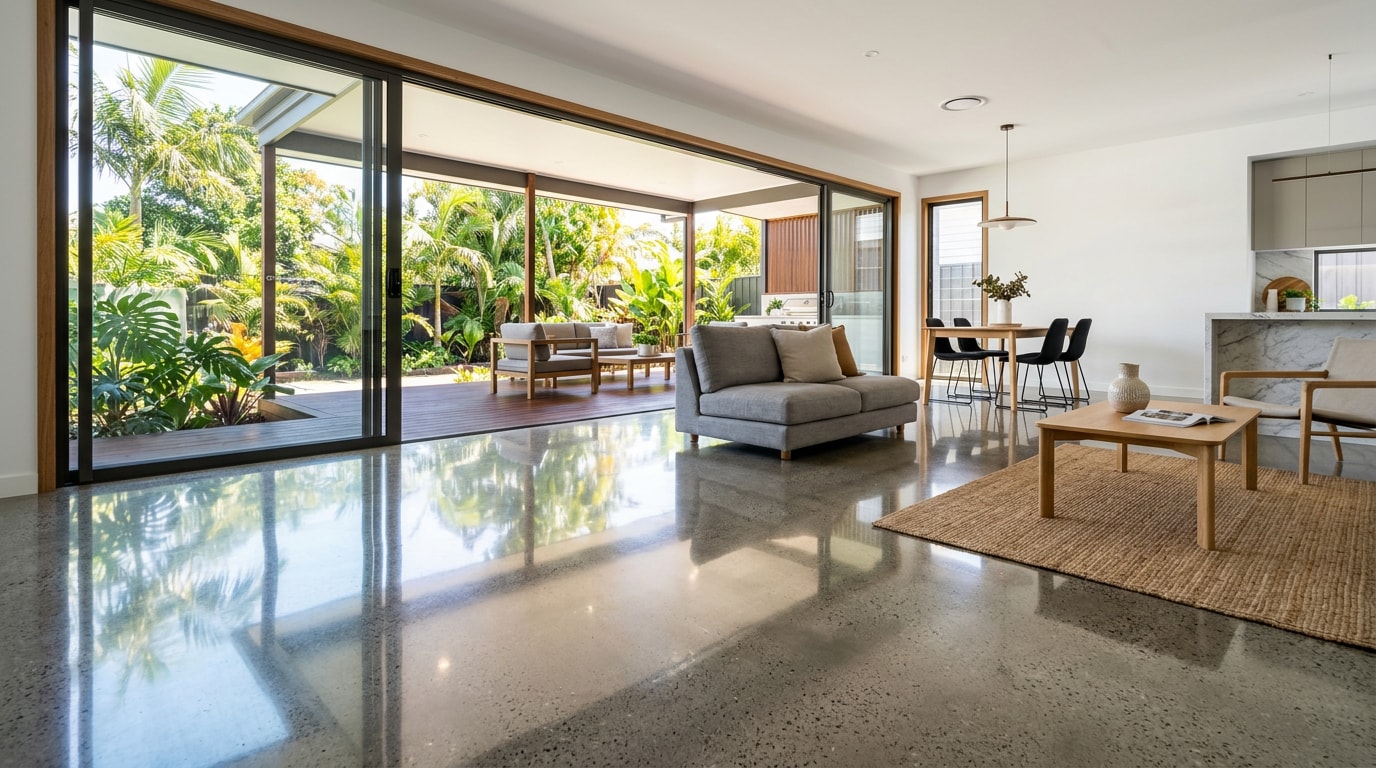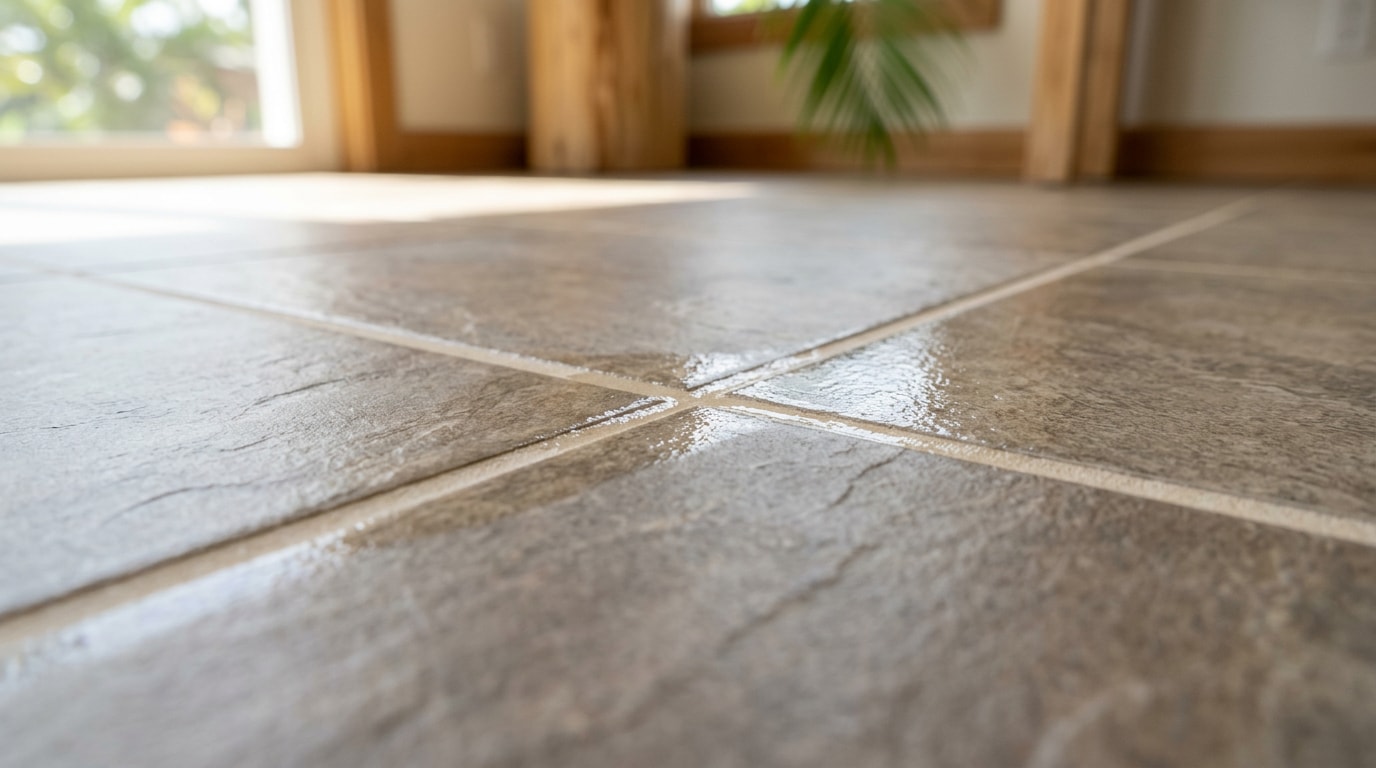
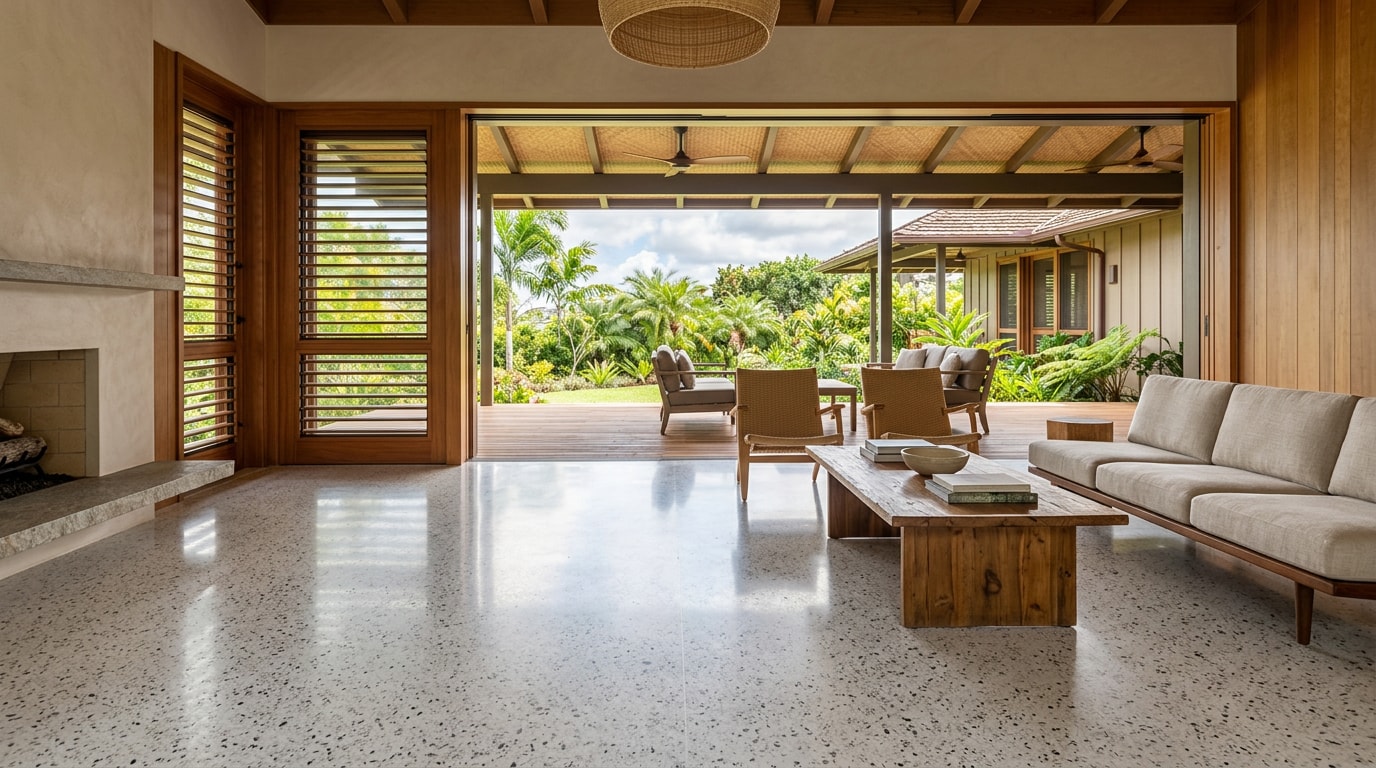
Terrazzo flooring is a composite surface made of stone or glass chips set in a cement or epoxy binder, then ground flat and polished. If you are asking what is terrazzo flooring, Hawaii, HI adds variables most mainland guides skip: salt air, damp on-grade slabs, and ocean freight on every pallet of resin. Here is how it is made, what it realistically costs on-island in 2026, and where it earns its price.
What Is Terrazzo Flooring?
Terrazzo is a poured or precast floor built from two ingredients: aggregate and binder. It is a composite flooring system of either a cement or resinous binder mixed with chips of marble, glass, or other aggregates, usually mixed on site and troweled in place, then cured, ground, and polished to a smooth, hard finish.
The parts break down like this:
- Aggregate: marble, granite, quartz, recycled glass, or shell chips.
- Binder: portland cement or epoxy resin, pigmented to any color.
- Divider strips: zinc, brass, or aluminum metal strips that control cracking and create patterns.
- Finish: ground, then honed or polished, then sealed.
That single-surface quality is a big part of the appeal here. There is no grout network to scrub and no plank seams for sand to wedge into, which matters in a state where everyone walks in barefoot.
Our flooring installation and repair services cover both poured and precast systems, and the finishing work overlaps heavily with polished concrete finishing.
Poured in place vs. precast
Poured in place means the mix is installed wet on your slab and ground flat on site. It gives you a seamless floor with custom patterns, but it needs a flat, dry, crack-controlled substrate.
Precast means tiles, treads, or slabs are cast in a shop and set like tile. It is faster, less dependent on your slab, and usually the practical choice for a single bathroom or a stair run.
A short history worth knowing
Venetian mosaic workers created the first terrazzo out of thrift, pressing leftover marble chips into mortar terraces and hand rubbing them smooth. Two later breakthroughs made it a mass product: the electric grinder, which replaced hand rubbing, and metal divider strips, which controlled cracking and opened the door to patterned Art Deco work. If you have crossed an older Honolulu civic building or a 1960s school corridor, you have already walked on cement terrazzo.
Terrazzo Flooring Cost in Hawaii (2026 Ranges)
Terrazzo lands above tile and below high-end natural stone slab. Material is only part of it. Labor, substrate prep, slab moisture testing, divider strip layout, and the number of grinding passes often account for half the installed price.
| System | Installed cost per sq ft (2026 est.) | Binder | Typical service life | Best use |
|---|---|---|---|---|
| Poured in place epoxy | $30 to $55 | Epoxy resin | 40+ years | Interior floors, wet rooms |
| Poured in place cementitious | $25 to $50 | Portland cement | 50+ years | Lanai, pool deck, exteriors |
| Precast terrazzo tile | $20 to $40 | Epoxy or cement | 30 to 50 years | Small rooms, retrofits, stairs |
Island projects carry a real premium on top of those ranges. Resin, pigment, and imported aggregate all arrive by ocean container. Few crews statewide own full grinding and polishing rigs, so inter-island mobilization gets billed separately on jobs in Maui, Kauai, and Kailua-Kona.
Thickness drives both material volume and price tier. Epoxy terrazzo is a nominal 1/4 inch or 3/8 inch resin matrix veneer placed on a flat concrete slab, which is why it is called the thin-set system , while bonded cement systems are far thicker. You can see the published system definitions on the National Terrazzo and Mosaic Association technical pages.
If you are comparing resin floors by budget, our breakdown of epoxy flooring costs in Hilo uses the same freight and mobilization math.
These are planning estimates only. Get a free estimate and we will price the actual slab, not an average.
Does Terrazzo Hold Up in Hawaii's Climate?
Mostly yes, with three island-specific caveats that decide which system you should buy.
1. Your slab moisture is the real variable. Older on-grade island homes were often poured without a vapor retarder, and ground moisture pushes upward year round. Resin manufacturers publish a maximum internal slab relative humidity before their systems can be installed, and that number is the single most common reason we recommend a cement based mix or a moisture mitigation coat instead of a straight epoxy pour. We test slab RH with in-situ probes before quoting any poured floor, because a failed bond on a 600 square foot pour is not a repair, it is a redo.
2. Salt air and UV punish binders differently. Epoxy can yellow and chalk under sustained direct sun, so covered lanai, pool decks, and thresholds generally call for cementitious or precast systems with a breathable sealer.
3. Wet feet are constant. Skip the mirror polish in bathrooms and near pool edges. Per ANSI A326.3, hard surface flooring for level interior spaces expected to be walked on when wet with water should have a wet DCOF of 0.42 or greater , and you can review how that DCOF rating works in practice before you approve a finish level.
| Island condition | Better choice | Why |
|---|---|---|
| Damp on-grade slab | Cementitious or precast | Tolerates vapor drive better than thin-set resin |
| Direct sun lanai | Cementitious or precast | Epoxy can yellow under sustained UV |
| Interior wet room | Epoxy, honed finish | Non-porous, seamless, integral cove base |
| Salt spray exposure | Cement mix, breathable sealer | Avoids trapping chloride-laden moisture |
Types of Terrazzo by Aggregate
Color gets the attention, but chip size, chip material, and binder do the real work. They set the price, the texture underfoot, and how forgiving the floor is day to day.
White marble chip terrazzo
The classic. White marble aggregate in a grey or white cement base gives a creamy, softly speckled neutral. It bounces light around rooms shaded by deep lanai overhangs, which is a genuine advantage in older island homes.
One caveat: polished terrazzo with calcite based marble chips can etch where citrus, vinegar, or wine sits too long.
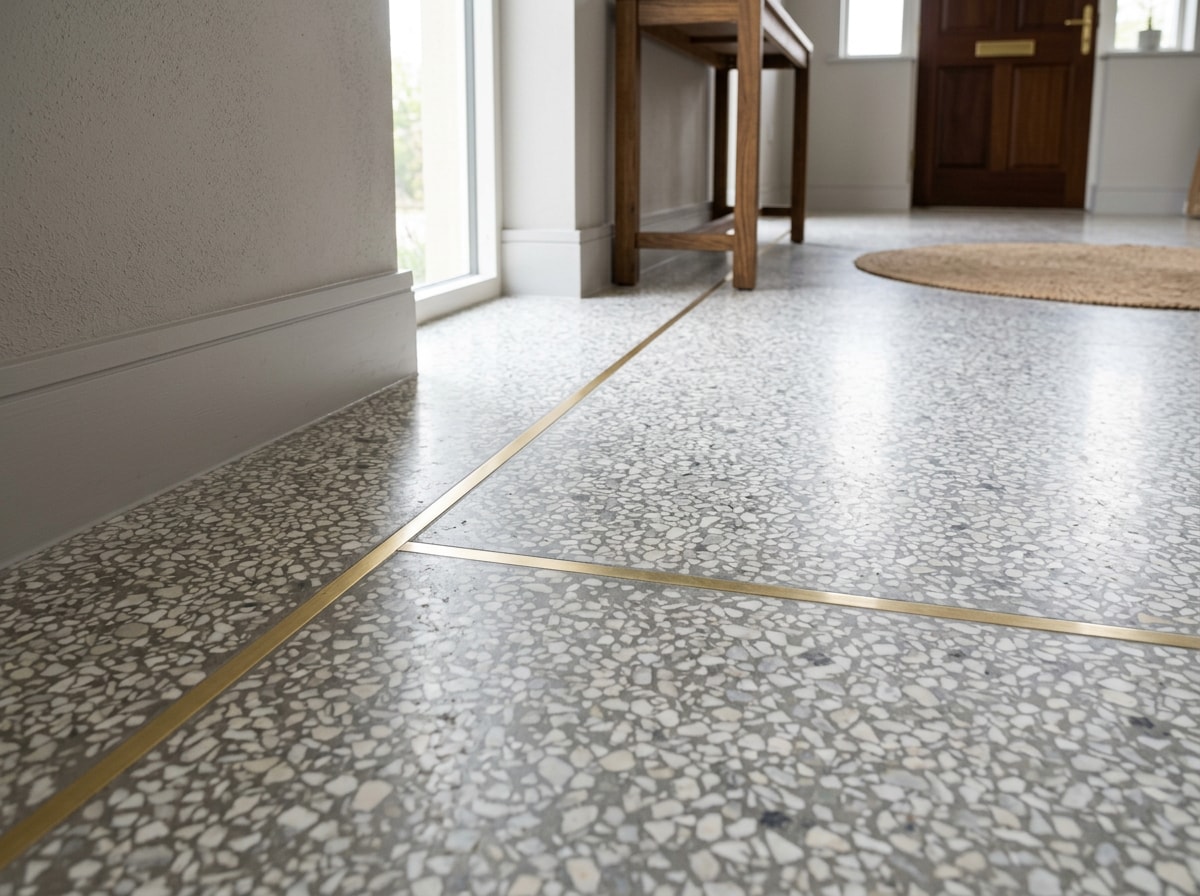
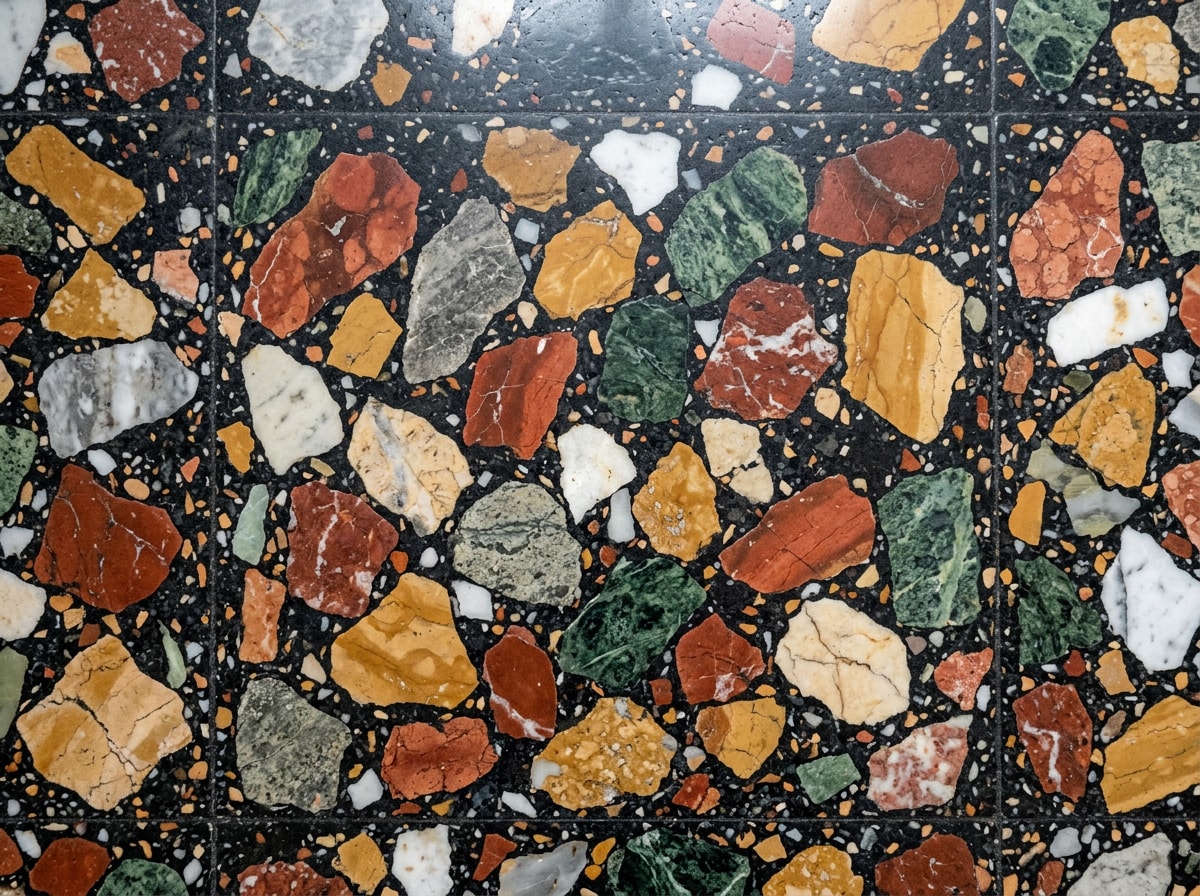
Multicolored terrazzo
Here the aggregate blend does the decorating. Large chips in high contrast colors, often over a dark binder.
Beyond the look, there is a practical payoff. A busy pattern hides tracked-in sand and grit far better than a flat neutral, which makes it a smart pick for entries and beach house hallways.
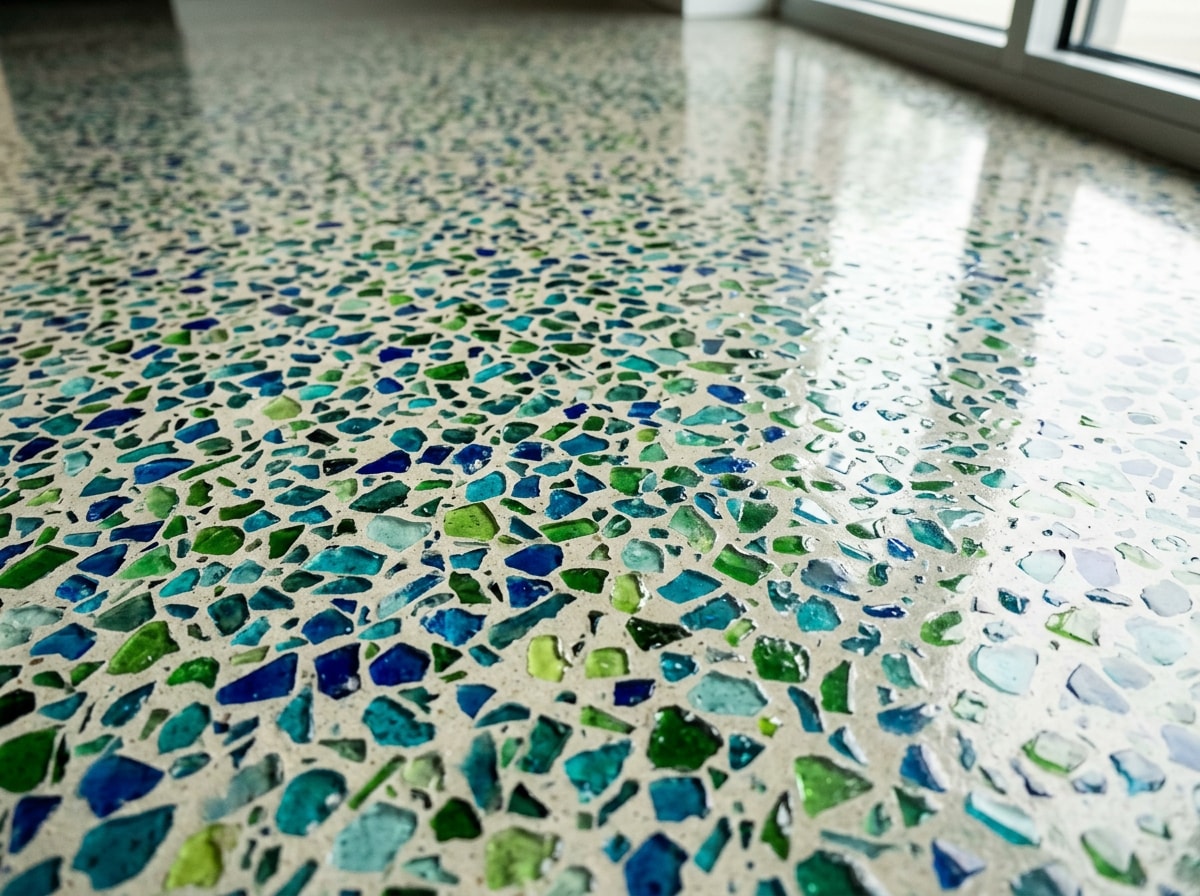
Glass chip terrazzo
Recycled glass aggregate produces translucent, jewel-toned flecks that catch light at an angle. Glass almost always pairs with epoxy rather than cement, because epoxy bonds to the smooth chip faces and avoids the alkaline reaction that can cloud glass in a cement matrix.
For homeowners after a high recycled-content floor, this is one of the stronger options on the market. The International Masonry Institute's terrazzo assembly overview covers how these assemblies are built from the slab up.
Terrazzo Design Ideas for Island Homes
A poured floor runs wall to wall with almost no interruption, which suits open plans where living room, kitchen, and lanai read as one space. The same material works on islands, counters, and built-ins.
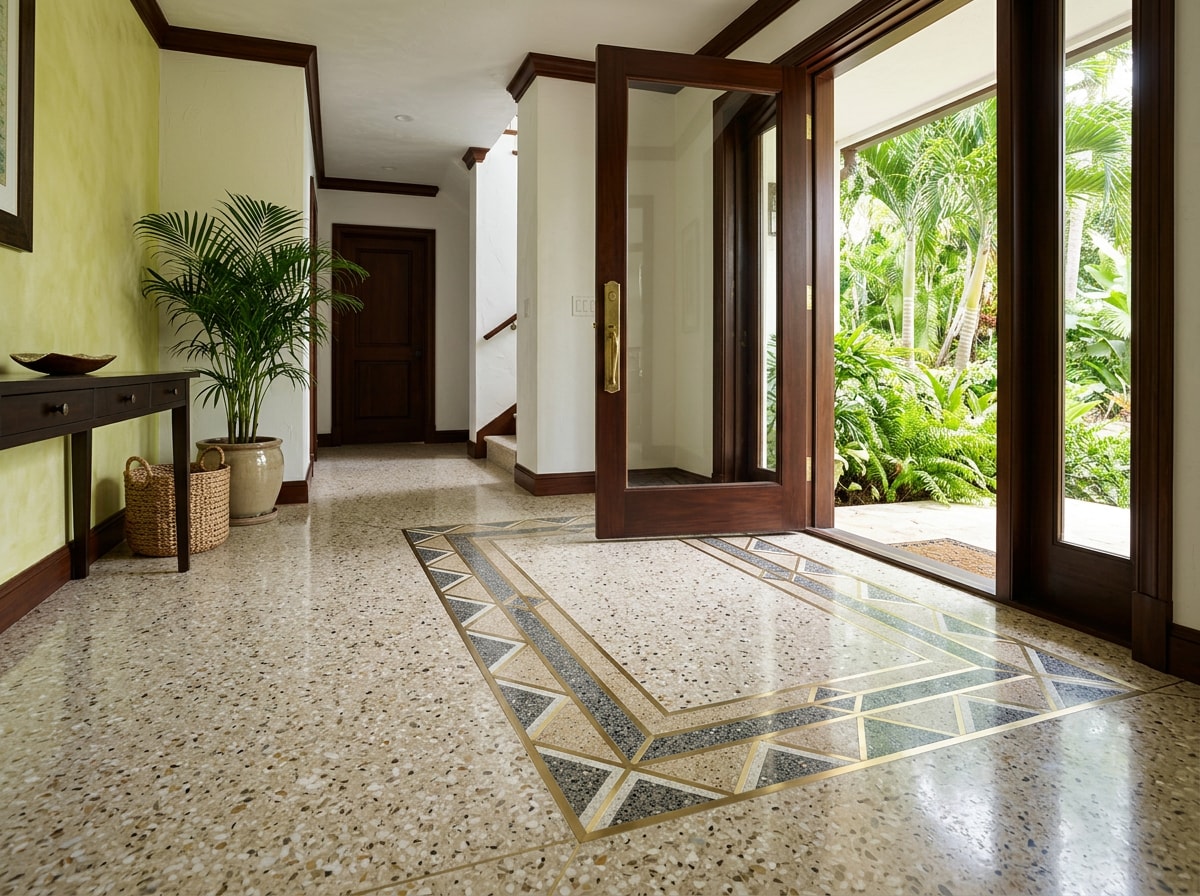
The entry
The entry is where terrazzo shows off. Divider strips let you run a geometric pattern, an inset border, or a house medallion right at the threshold.
It is also the most abused floor in any Hawaii home: slippers off, sand in, wet feet from the yard. Terrazzo handles that cycle for decades.
The bathroom
Seamless really pays off here. A terrazzo bath floor can run straight into a curbless wet room with an integral coved base, which eliminates the grout lines where mildew starts.
Specify a honed or lightly textured finish and confirm the slip rating before the final grind.
The lanai and pool deck
In Hawaii, "terrace" usually means a covered lanai, a pool deck, or the threshold between them. Build in proper slope and drainage, because standing water on any outdoor terrazzo invites staining and biological growth. Where a full terrazzo pour is not in budget, decorative concrete installation gets a similar speckled effect outdoors for less.
Terrazzo Maintenance
Day to day care is simple:
- Dust mop regularly to lift sand before it abrades the polish.
- Damp mop with a pH neutral cleaner.
- Keep vinegar, bleach, and scouring powders off the surface entirely.
- Put walk-off mats at every exterior door.
Binder type decides the rest. Cement terrazzo is porous and needs periodic resealing, typically every one to three years depending on traffic and manufacturer guidance. Epoxy terrazzo is essentially non-porous and needs far less. Our stone sealing and protection crew handles both on a schedule.
Humidity adds two wrinkles. Shaded lanai sections stay damp and can grow mildew at the perimeter, and tracked-in sand acts like sandpaper underfoot.
When a floor finally looks tired, you refinish rather than replace. Honing and repolishing can bring a 50-year-old floor back, and that repairability is a large part of terrazzo's value. We do that work as concrete restoration and refinishing across Hawaii and Honolulu.
Lasting Trend or Passing Fad?
Terrazzo-print wallpaper, laminate counters, and speckled accessories are trend cycle items. They will date the way every fast-furniture finish does.
A poured floor is a different commitment, with a realistic service life measured in decades rather than seasons.
So treat the two differently. If resale matters, keep the aggregate blend and binder color conservative: neutral base, moderate chip size, nothing you would call a statement. Save the bold mixes for a powder room, a bar surround, or a stair landing.
FAQ
Is terrazzo considered luxury?
It is priced and marketed as a high-end finish, mostly because of the skilled labor involved rather than the raw materials. The irony is that it started as a way to reuse scrap marble. Poured terrazzo is the luxury product. Porcelain terrazzo-look tile delivers the aesthetic for a fraction of the cost.
Is terrazzo flooring durable?
Very. Properly installed terrazzo routinely serves for decades and resists scratching well enough for commercial traffic. The caveats matter: substrate cracks can telegraph through the floor, and acidic spills can etch cement based systems. Durability depends heavily on the slab underneath.
What are the disadvantages of terrazzo flooring?
High upfront cost, long install time, and a hard, cold, slippery-when-polished surface. Acidic substances can stain it if not cleaned promptly, and cement based terrazzo needs periodic sealing to maintain its finish. It also needs a sound, flat substrate, which can mean extra prep on older island slabs.
Is terrazzo cheaper than tile?
No. Standard porcelain tile installs for far less per square foot. Terrazzo competes with high-end stone, and it wins on seam-free performance and refinishability rather than on price.
Can terrazzo be installed over an existing concrete slab?
Usually yes, if the slab is flat, structurally sound, crack-controlled, and dry enough. Thin-set epoxy adds very little height, so it often works in remodels without raising door thresholds. Moisture testing comes first.
Can terrazzo flooring be repaired if damaged?
Yes. Repair means patching the damaged area with matched aggregate and binder, then grinding and repolishing flush with the surrounding floor. The hard part is color matching an older mix, since chip sources change. Ask your installer to leave a bucket of leftover chips behind.
Can you pour your own terrazzo floor?
Small DIY projects work fine: tabletops, planters, shower niches. A full poured floor is another matter. It requires commercial grinders and polishers, slab moisture testing, and precise divider strip layout. Hire an installer, and request an estimate before buying materials.
Planning a Terrazzo Floor on Your Island
Luxe Pacific installs, restores, and refinishes terrazzo, polished concrete, and stone floors statewide. See finished work on our projects page, browse services from the Luxe Pacific homepage, or send us your slab details and we will tell you honestly whether epoxy, cement, or precast is the right call for your site.